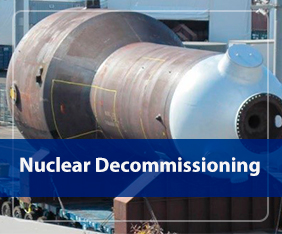
The nuclear power plant decommissioning timeline is one of the most complex, tightly regulated, and resource-intensive processes in the energy sector. When a nuclear facility reaches the end of its operational life, the path from reactor shutdown to full site release can span anywhere from 20 to 60 years, depending on the chosen decommissioning strategy, regulatory requirements, site conditions, and funding structure.
As the U.S. nuclear fleet continues to age and more plants announce permanent closures, understanding the nuclear facility decommissioning process has become essential for utility owners, contractors, regulators, and the communities surrounding these sites.
This guide outlines the full nuclear plant shutdown timeline, the phases involved, the factors that influence duration, and what specialized support services, like those provided by UESI, play a critical role throughout.
Why the Nuclear Power Plant Decommissioning Timeline Varies So Widely
No two decommissioning projects are identical. The power plant decommissioning duration is shaped by multiple variables that are unique to each facility:
- Reactor type and size: Boiling water reactors (BWRs) and pressurized water reactors (PWRs) have different configurations that affect the complexity of radiological decontamination and structural dismantlement.
- Decommissioning strategy selected: The NRC recognizes 3 primary strategies: DECON (immediate dismantlement), SAFSTOR (safe storage for up to 60 years before dismantlement), and ENTOMB (encasement in concrete, rare for commercial plants). This choice dramatically affects the nuclear plant shutdown timeline.
- Availability of funding: Decommissioning trust funds must meet NRC minimum financial assurance requirements. Underfunded sites may face delays.
- Regulatory milestones: NRC license amendments, Post-Shutdown Decommissioning Activities Reports (PSDARs), and final status surveys each require review periods that can extend the nuclear power plant decommissioning timeline by months or years.
- Spent fuel management: The availability of an off-site spent fuel repository or on-site interim dry-cask storage solutions directly affects scheduling.
- Site contamination level: Higher radiological inventories in groundwater or soil require more extensive remediation before license termination is achievable.
Understanding these variables is essential for owners and project managers trying to establish a realistic nuclear power plant shutdown timeline from the outset.
The 5 Core Phases of the Nuclear Facility Decommissioning Process
While every project is unique, the nuclear facility decommissioning process follows a general sequence of phases recognized by the NRC and industry best practices. The table below summarizes each phase, its typical duration, and its key activities:
| Phase | Estimated Duration | Key Activities |
| Phase 1: SAFSTOR / Pre-Planning | 1–5 years | NRC license amendments, PSDAR filing, decommissioning trust fund verification, site characterization, and regulatory notifications. |
| Phase 2: Defueling & Spent Fuel Management | 2–5 years | Transfer of spent nuclear fuel from reactors to spent fuel pools; preparation for eventual dry cask storage. |
| Phase 3: Radiological Decontamination | 5–15 years | Decontamination of primary systems, reactor vessel, steam generators; underwater cutting and dismantlement of submerged components. |
| Phase 4: Structural Dismantlement | 5–10 years | Demolition of non-radioactive structures, containment buildings, turbine halls; waste segmentation and shipment. |
| Phase 5: Site Remediation & License Termination | 3–10 years | Soil sampling, groundwater monitoring, final status surveys, NRC license termination and unrestricted release of the site. |
It is important to note that these phases in the nuclear power plant decommissioning timeline often overlap. Radiological decontamination, for instance, may begin in some systems while spent fuel management is still ongoing in others. Effective project management requires careful sequencing to optimize the power plant decommissioning duration without compromising worker safety or regulatory compliance.
DECON vs. SAFSTOR: Which Strategy Affects the Timeline Most?
The single most consequential decision in the nuclear plant shutdown timeline is the choice between DECON and SAFSTOR:
DECON (Immediate Dismantlement)
Under the DECON strategy, dismantlement begins shortly after reactor shutdown, typically within 1 to 2 years. This approach compresses the overall nuclear power plant decommissioning timeline to roughly 20–30 years.
DECON is favored when decommissioning trust funds are robust, the workforce is experienced and readily available, and the site owner wishes to complete the process efficiently. It is increasingly the preferred approach for privately owned decommissioning companies that acquire plants from utilities.
SAFSTOR (Safe Storage)
SAFSTOR allows the facility to remain in a monitored, safe condition for decades before active dismantlement begins, with the NRC permitting up to 60 years post-shutdown. The rationale is that radioactive decay naturally reduces the radiological inventory over time, simplifying eventual decontamination.
However, this approach extends the total power plant decommissioning duration considerably and requires sustained maintenance, security, and monitoring costs throughout the storage period. In recent years, the trend among major decommissioning contractors has shifted toward accelerated DECON-based strategies, driven by improved technology, larger specialized workforces, and pressure from host communities to restore sites more quickly.
Underwater and Below-Grade Work: A Critical but Often Overlooked Phase
One of the most technically demanding aspects of any nuclear power plant decommissioning timeline involves the inspection, maintenance, and dismantlement of components located underwater or below grade. Reactor vessels, internal components, spent fuel pool hardware, and cooling water intake structures all require specialized underwater engineering expertise.
At UESI, our commercial diving and underwater engineering teams provide mission-critical support during this phase, including:
- Underwater inspection and non-destructive examination (NDE) of reactor internals and spent fuel pools
- Submerged cutting and segmentation of reactor vessel components
- Inspection and maintenance of intake structures, discharge tunnels, and cooling water systems scheduled for decommissioning
- Remotely operated vehicle (ROV) support for confined or high-dose environments
- Post-decontamination verification surveys in underwater environments
These services are indispensable to keeping the nuclear facility decommissioning process on schedule, as delays in underwater work frequently cascade into multi-year setbacks for the overall nuclear plant shutdown timeline.
Regulatory Milestones That Define the Nuclear Plant Shutdown Timeline
The NRC’s regulatory framework establishes mandatory milestones that every nuclear power plant decommissioning timeline must account for:
- Within 2 years of shutdown: Submit the Post-Shutdown Decommissioning Activities Report (PSDAR) to the NRC, detailing the decommissioning strategy, schedule, cost estimate, and environmental impact assessment.
- Within 60 years of shutdown: Complete all decommissioning activities and submit a license termination plan (LTP) to the NRC. The NRC may grant a single 20-year extension when completion is not practicable within 60 years.
- Final Status Survey: Demonstrate that residual radioactivity meets the NRC’s license termination rule (10 CFR Part 20, Subpart E) through comprehensive radiological surveys.
- Site Release: The NRC terminates the operating license, allowing unrestricted use of the property.
Tracking these milestones is not merely a regulatory obligation; it is the structural backbone of any credible nuclear power plant decommissioning timeline. Missing a milestone can trigger NRC enforcement action and significantly delay site release.
How UESI Supports the Nuclear Facility Decommissioning Process
UESI (Underwater Engineering Services, Inc.) has decades of experience delivering engineering, inspection, maintenance, and construction services to nuclear industry customers worldwide. Our capabilities span the entire nuclear plant shutdown timeline, from early post-shutdown inspections to final site remediation support.
We serve both operating commercial nuclear plants and facilities actively undergoing the nuclear facility decommissioning process, including:
- Commercial nuclear power plants on the U.S. East Coast.
- Department of Energy (DOE) research and government sites
- International nuclear facilities requiring specialized underwater and below-grade expertise
Our team combines licensed nuclear engineering expertise with commercial diving operations, a combination that is rare in the industry and invaluable for complex, multi-phase decommissioning projects where above-water and below-water scopes must be coordinated seamlessly.
Ready to Support Your Decommissioning Project?
UESI provides specialized engineering and underwater services for every phase of the nuclear facility decommissioning process, from initial inspections to final site surveys. Contact our team to schedule a consultation and let us ensure your project draws and meets a realistic nuclear power plant decommissioning timeline.
Stay updated on the latest in nuclear engineering and decommissioning by following UESI on social media. Facebook, LinkedIn, and YouTube